
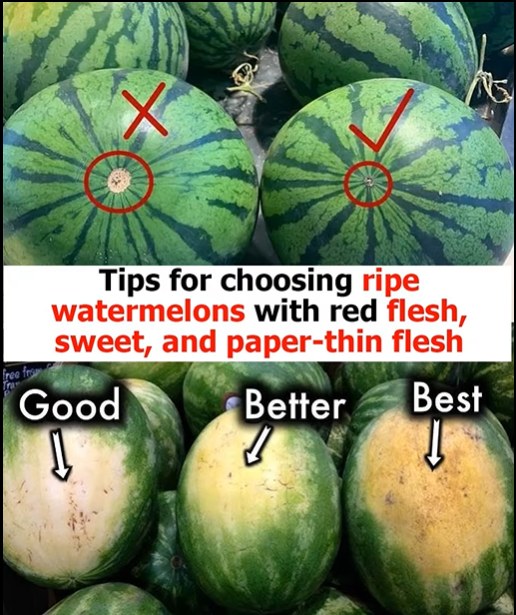
Here are some pro tips for choosing a ripe, sweet watermelon with red, juicy flesh and a nice thin rind (aka “paper-thin flesh”):
 1. Look for the Field Spot (Sugar Spot)
-
What: The creamy yellow spot where the melon rested on the ground.
-
Why: A darker yellow or even orangey field spot usually means it was ripened longer on the vine — sweetness alert!
-
Avoid: White or no field spot = underripe.
 2. Tap Test (Sound Check)
-
How: Give it a gentle thump or slap.
-
What to listen for: A deep, hollow sound = juicier and riper.
-
Dull or flat sound: May be underripe or overripe.
 3. Check the Webbing (Sugar Lines)
-
What: Brown, web-like veins or scars.
-
Why: These are from pollination and sugar formation. More webbing = sweeter melon.
 4. Heaviness
-
Pick up a few of similar size — the heaviest one is likely the juiciest.
-
Watermelons are 90% water. More weight = more juice.
 5. Shape & Symmetry
-
Look for a uniform, symmetrical shape (round or oval, but even all around).
-
Lumpy, irregular melons may have grown inconsistently and can be dry or mealy inside.
 6. Rind Color and Texture
-
Should have a dull, matte finish (shiny = underripe).
-
Rind should be firm and hard to scratch, especially if you’re looking for thin-skinned types.
 Bonus Tip: Variety
If you can, look for varieties known for red flesh and sweetness like:
-
Crimson Sweet
-
Sugar Baby
-
Charleston Gray
-
Jubilee
Some have thinner rinds by nature — ask your local farmer or produce manager what’s fresh and in-season.
-
