
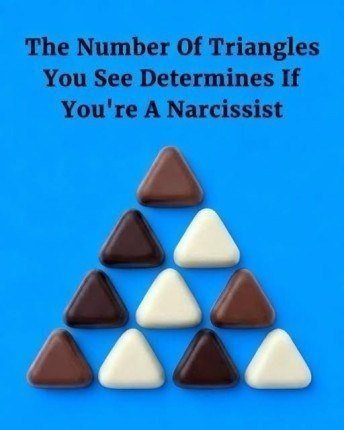
For example, a viral post might say:
“If you saw fewer triangles, you are confident and independent.”
“If you saw more triangles, you are overly focused on details and crave validation.”
Both statements are broad enough that most people can see themselves in them. The human mind naturally searches for confirmation.
If the description is flattering, we are especially likely to accept it. If it suggests a flaw, we may interpret it in a way that still feels accurate.
This psychological bias fuels the popularity of personality quizzes.
Social Media Amplification
The structure of social media encourages viral content that is:
Simple
Emotional
Shareable
Slightly provocative
Telling someone they might be a narcissist based on a quick glance is provocative. It sparks curiosity. It invites debate.
People tag friends. They compare numbers. They argue over interpretations.
The more people interact with the post, the more algorithms promote it. Engagement becomes validation — not of scientific accuracy, but of visibility.
The Problem With Pop Psychology Labels
While harmless fun can be enjoyable, labeling someone a narcissist casually has consequences.
“Narcissist” has become a popular insult in online culture. It is often used to describe:
Selfish behavior
Disagreements
Confidence
Boundary-setting
Overuse of the term dilutes its meaning. It can also stigmatize those who genuinely struggle with personality disorders.
Reducing a complex mental health condition to a triangle-counting game trivializes both psychology and lived experiences.
Why We Want Easy Diagnoses
Modern life is complicated. Relationships are messy. Self-reflection takes effort.
A quick visual test offers clarity without discomfort. It provides a tidy answer in place of deeper introspection.
But real growth rarely comes from shortcuts.
Understanding personality requires examining patterns:
How do you handle conflict?
Do you consider others’ perspectives?
How do you respond to criticism?
Do you seek admiration excessively?
These questions require honesty and time. They cannot be answered by counting shapes.
What the Triangle Test Might Actually Reveal
While the test does not diagnose narcissism, it may reflect something else: cognitive engagement.
If you take your time and count carefully, you may see more triangles simply because you looked longer.
If you glance briefly and move on, you may see fewer.
This difference could relate to patience, attention span, or curiosity — not personality pathology.
Even then, one moment of perception cannot define enduring traits.
The Broader Trend of Optical Personality Tests
The triangle challenge is part of a larger trend of optical illusion personality tests. Similar posts claim that:
The first animal you see reveals your strengths.
The direction of spinning shapes indicates creativity.
Hidden faces determine your emotional intelligence.
While these images are fascinating demonstrations of visual perception, none are validated diagnostic tools.
Psychological assessment is rigorous. It involves structured interviews, standardized questionnaires, and empirical research.
Internet illusions are entertainment.
The Risk of Self-Diagnosis
Another concern is self-diagnosis based on viral content.
If someone sees a description that resonates — especially a negative one — they may internalize it.
“I saw five triangles. That means I’m self-centered.”
This kind of conclusion can shape self-image unnecessarily. Identity is powerful. Labels influence behavior.
It’s important to remember that credible psychological conclusions are evidence-based and contextual.
