
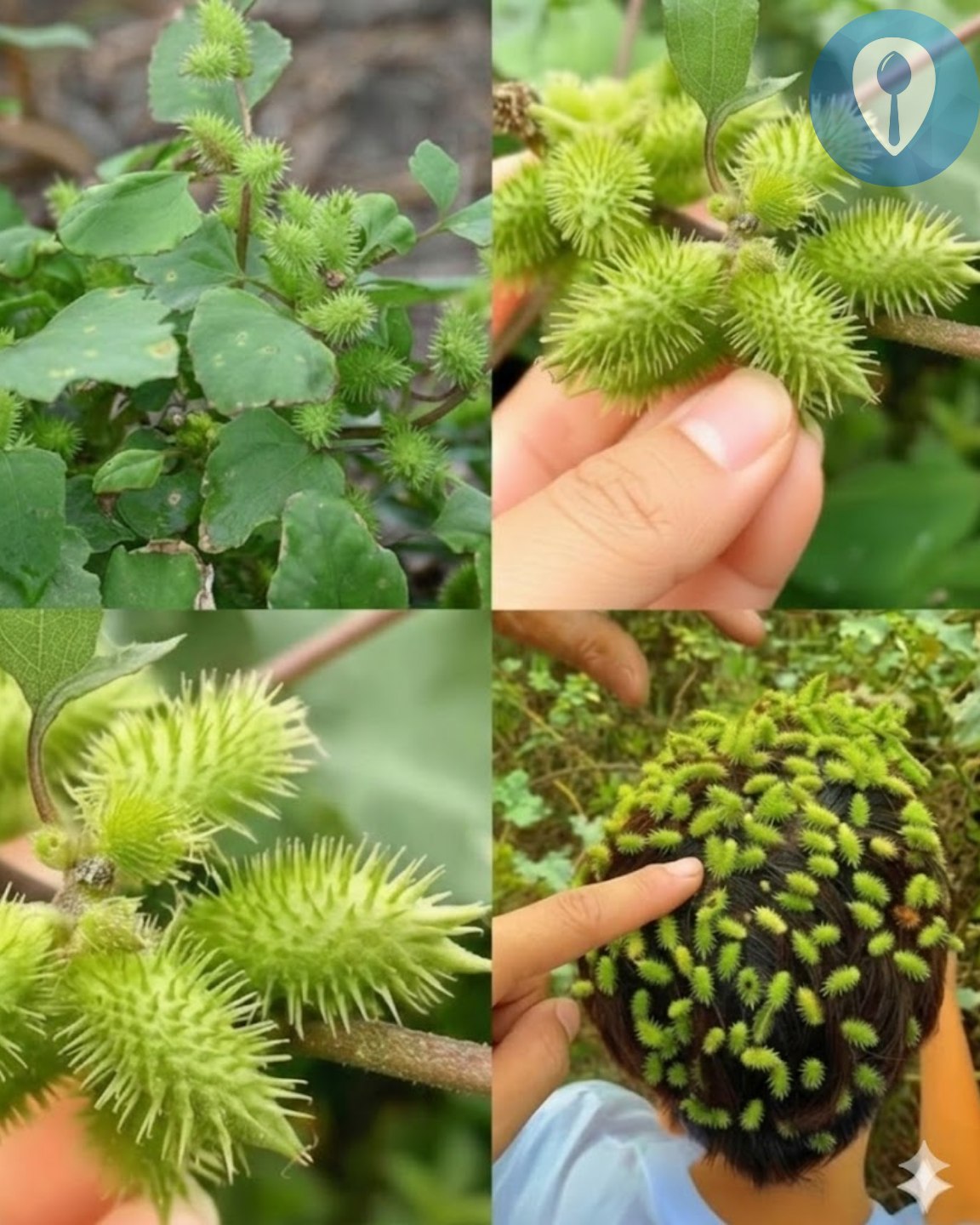
This has drawn interest for potential applications in:
Respiratory inflammation
Joint discomfort
Skin irritation
Still, controlled human studies are necessary before drawing firm conclusions.
cây ké đầu ngựa – Công Ty TNHH Trúc Vũ Farm
Respiratory and Sinus Support
One of the most well-documented traditional uses of Xanthium strumarium is in nasal and sinus conditions.
In TCM formulations, it is often combined with other herbs to:
Open nasal passages
Reduce sinus congestion
Relieve pressure headaches
Some preliminary research supports its potential role in modulating inflammatory responses in the respiratory tract.
However, self-treatment without professional guidance is not recommended.
Antimicrobial and Antioxidant Properties
Laboratory studies have shown that certain extracts may inhibit the growth of some bacteria and fungi. Additionally, antioxidant activity has been observed, suggesting potential protective effects against oxidative stress.
While promising, these findings are early-stage and should not be interpreted as proof of medical efficacy.
Phát hiện hợp chất chống lão hóa trong quả ké đầu ngựa
Safety Concerns and Toxicity
One critical aspect of Xanthium strumarium is its potential toxicity.
The plant contains compounds such as carboxyatractyloside, which can be toxic in high amounts — particularly in raw or improperly prepared forms.
Reported risks include:
Liver toxicity
Gastrointestinal distress
Neurological symptoms in severe cases
Because of this, traditional medicine systems often emphasize proper preparation methods to reduce toxicity.
Use should only occur under the supervision of qualified healthcare practitioners familiar with herbal medicine.
Modern Applications and Research Interest
Today, Xanthium strumarium is primarily studied in research settings exploring:
Anti-inflammatory drug development
Natural antimicrobial compounds
Plant-derived therapeutic agents
It is not widely used in mainstream Western medicine due to safety concerns and limited clinical data.
However, its historical use continues in some traditional medical systems under controlled conditions.
Important Considerations
Anyone considering herbal remedies containing cocklebur should keep in mind:
Dosage matters significantly
Improper preparation may increase toxicity
It may interact with medications
Pregnant or breastfeeding individuals should avoid it
Individuals with liver conditions should not use it
Herbal medicine does not automatically mean safe. Professional guidance is essential.
Ké đầu ngựa: Dược liệu có nhiều tiềm năng hỗ trợ sức khỏe
Final Thoughts
Xanthium strumarium represents a fascinating example of how traditional plant medicine intersects with modern scientific curiosity. Used for centuries in respiratory and inflammatory conditions, it contains bioactive compounds that are now being studied for potential therapeutic applications.
However, its toxic potential requires caution. While traditional knowledge offers valuable insights, modern safety standards and clinical evidence are equally important.
As research continues, cocklebur may contribute to a better understanding of plant-based compounds — but until more evidence is available, it should be approached thoughtfully and responsibly.
