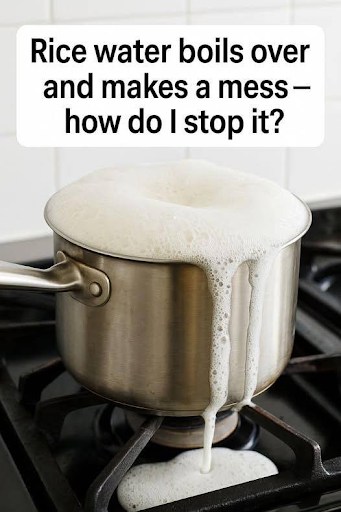
6. Don’t Skip the Lid Tricks: Venting, Tilting, and Partial CoversThe way you use the lid can influence whether or not your rice boils over. Leaving a small gap or venting the lid allows steam to escape, reducing pressure inside the pot. You can achieve this by tilting the lid slightly or using a lid with a built-in vent.
Alternatively, you can cover the pot partially rather than sealing it completely. This method allows steam to escape while still trapping enough heat to cook the rice thoroughly. Experiment with different lid positions to find what works best with your pot and stove.
7. Stir at the Start to Break Up Surface Starch
Stirring the rice at the beginning of cooking can help break up the surface starch that contributes to foam formation. After adding rice to boiling water, give it a quick stir to separate the grains and distribute the starch evenly.
This simple step can prevent the formation of a thick starch layer on the surface, minimizing the risk of boil-overs. Just be sure not to over-stir, as this can lead to mushy rice.
8. Add a Splash of Oil or Butter to Tame the Foam
Adding a small amount of oil or butter to the cooking water can help reduce foaming. The fat interacts with the starch, breaking down the bubbles and preventing them from rising too high.
A teaspoon of oil or a small knob of butter is usually sufficient for this purpose. Not only does this trick help control foam, but it can also add a subtle richness to the cooked rice.9. Try the Viral Wooden Spoon Hack — and Its Limits
One popular kitchen hack is placing a wooden spoon across the top of the pot to prevent boil-overs. The theory is that the spoon breaks the surface tension and pops the bubbles before they spill over.
While this method can be somewhat effective, its success largely depends on the pot size and cooking temperature. It is not foolproof, so it’s best used in conjunction with other preventative measures.
Continued on the next page
10. Microwave and Rice Cooker Methods That Don’t Boil Over
Using a microwave or rice cooker can be a hands-off way to avoid boil-overs entirely. Rice cookers are designed to manage temperature and steam, preventing spills by automatically adjusting the heat.