
Fresh tomatoes should smell tangy but clean.
Sour, rotten, or alcoholic odors are red flags.
Check Texture and Appearance
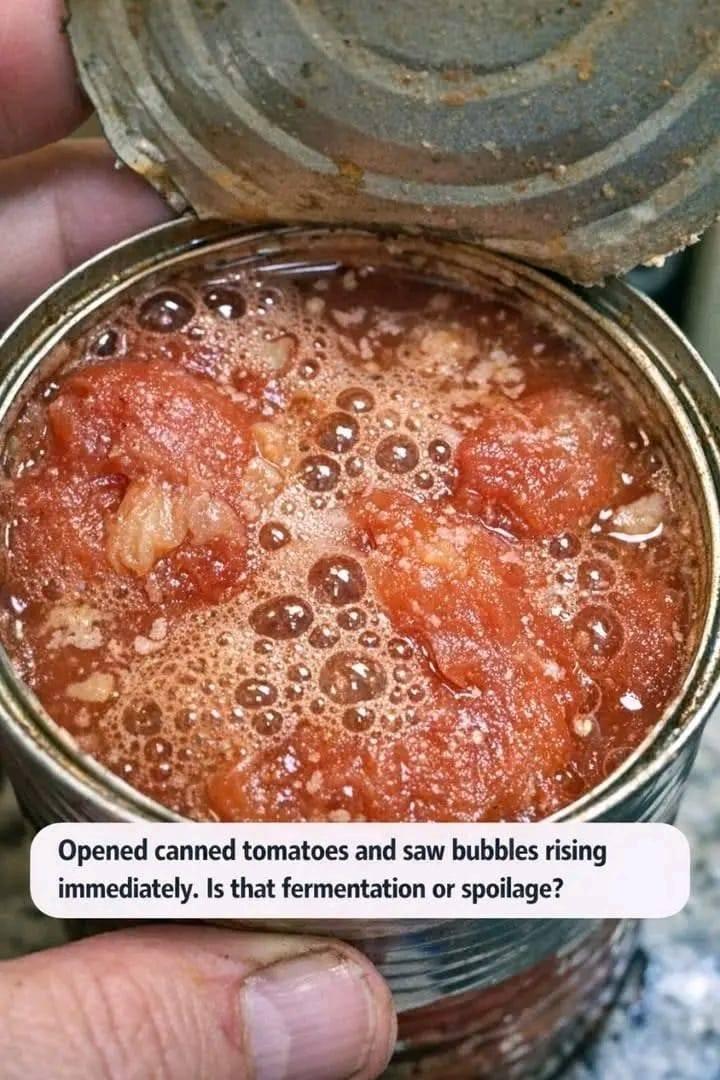
Is there foam?
Is the liquid cloudy?
Does it look discolored?
If multiple warning signs are present, it’s safest to discard the product.
The Role of Storage Conditions
Storage plays a major role in canned food safety. Even properly processed cans can deteriorate under extreme conditions.
High temperatures accelerate chemical reactions and may weaken seals. Freezing can cause expansion that compromises integrity. Excess humidity may promote rust.
Store canned tomatoes in a cool, dry place away from direct sunlight.
Why Tomatoes Are Slightly Unique
Tomatoes are acidic, typically with a pH below 4.6. This acidity inhibits many harmful bacteria.
However, some spoilage organisms, including certain yeasts and molds, can tolerate acidic environments.
If fermentation occurs, it’s often due to:
Improper processing
Seal failure
Manufacturing defect
Post-processing contamination
Although rare in commercially produced products, it’s not impossible.
Should You Taste It to Be Sure?
No.
If there is any sign of spoilage, do not taste the product. Some bacterial toxins can be dangerous even in small amounts and may not have a strong smell.
When in doubt, throw it out.
Food safety professionals emphasize that avoiding risk is better than trying to salvage questionable food.
Common Myths About Canned Food
Myth: All Bubbles Mean Spoilage
Not true. Minor air release can be harmless.
Myth: High-Acid Foods Can’t Go Bad
False. While less risky than low-acid foods, they can still spoil.
Myth: If It Smells Fine, It’s Safe
Usually smell is a strong indicator—but not always definitive.
When to Contact the Manufacturer
If you suspect a manufacturing issue:
Take photos of the can.
Note the batch number and expiration date.
Contact the manufacturer.
Companies often investigate reports and may offer replacement or refund.
How Often Does This Happen?
Commercial canning is highly regulated and generally very safe. Incidents of contaminated canned tomatoes are rare.
However, occasional defects occur, which is why awareness matters.
Peace of Mind Guidelines
If you open canned tomatoes and see bubbles:
Check the can’s condition.
Observe how the bubbles behave.
Smell carefully.
Look for foam or discoloration.
When uncertain, discard.
Food safety is never worth gambling over the cost of a single can.
Final Thoughts
Seeing bubbles rise immediately after opening canned tomatoes can be surprising. In many cases, it’s simply trapped air releasing due to pressure changes. However, persistent bubbling, foul odor, foam, or a bulging can are warning signs of spoilage.
Fermentation inside a sealed commercial can is not normal and suggests contamination. While tomatoes’ natural acidity offers some protection, it does not eliminate all risk.
The safest rule is simple: if something seems off, trust your instincts and throw it away. Your health is worth far more than any pantry item.
When it comes to canned food, caution is always the right choice.
