
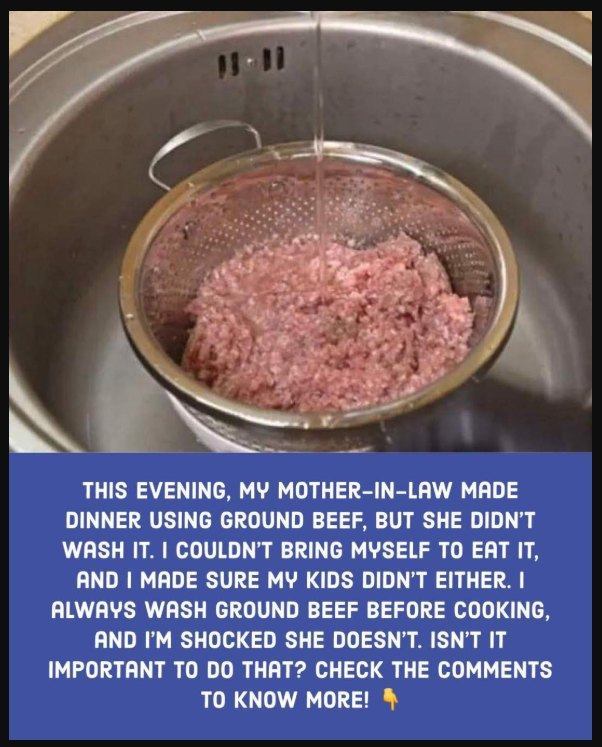
The Rinsing Habit: Where It Comes From
Many people grow up in households where rinsing meat is standard practice. Sometimes it’s chicken. Sometimes it’s ground beef. The reasoning often falls into one of these categories:
To “wash off” bacteria
To remove blood or packaging residue
To reduce fat and grease
To make the meat feel cleaner
For some families, rinsing meat is simply part of cooking — no questions asked. It becomes embedded in routine, passed down like a secret ingredient.
But here’s where it gets interesting: when it comes to ground beef, rinsing before cooking is not universally practiced — and in fact, many food safety experts advise against rinsing raw meat altogether.
What Food Safety Experts Say
According to food safety guidance from organizations like the United States Department of Agriculture (USDA), washing raw meat — including ground beef — is not recommended.
Why?
Because rinsing raw meat does not remove bacteria effectively. Harmful bacteria like E. coli or Salmonella are destroyed through proper cooking — not by rinsing. In fact, washing meat under running water can cause bacteria to splash onto nearby surfaces, increasing the risk of cross-contamination in the kitchen.
That’s right: rinsing may actually spread bacteria rather than eliminate it.
Ground beef, in particular, is designed to be cooked thoroughly. When heated to an internal temperature of 160°F (71°C), it becomes safe to eat. The cooking process — not rinsing — is what neutralizes harmful pathogens.
What About the Grease?
One common reason people rinse ground beef is to reduce fat.
However, rinsing raw ground beef won’t remove much fat — because the fat is distributed throughout the meat. It’s not just sitting on the surface waiting to be washed away.
If fat reduction is the goal, experts recommend:
Choosing leaner ground beef (like 90% lean or higher)
Draining cooked beef in a colander after browning
Blotting excess grease with paper towels
Some people even rinse cooked ground beef with hot water after browning to remove additional grease — though opinions differ on whether that affects flavor and texture.
But rinsing raw ground beef? That’s generally unnecessary.
The Emotional Side of Food Habits
Even with the science laid out clearly, food habits are rarely just about facts.
They’re emotional.
They’re cultural.
They’re tied to memory.
