
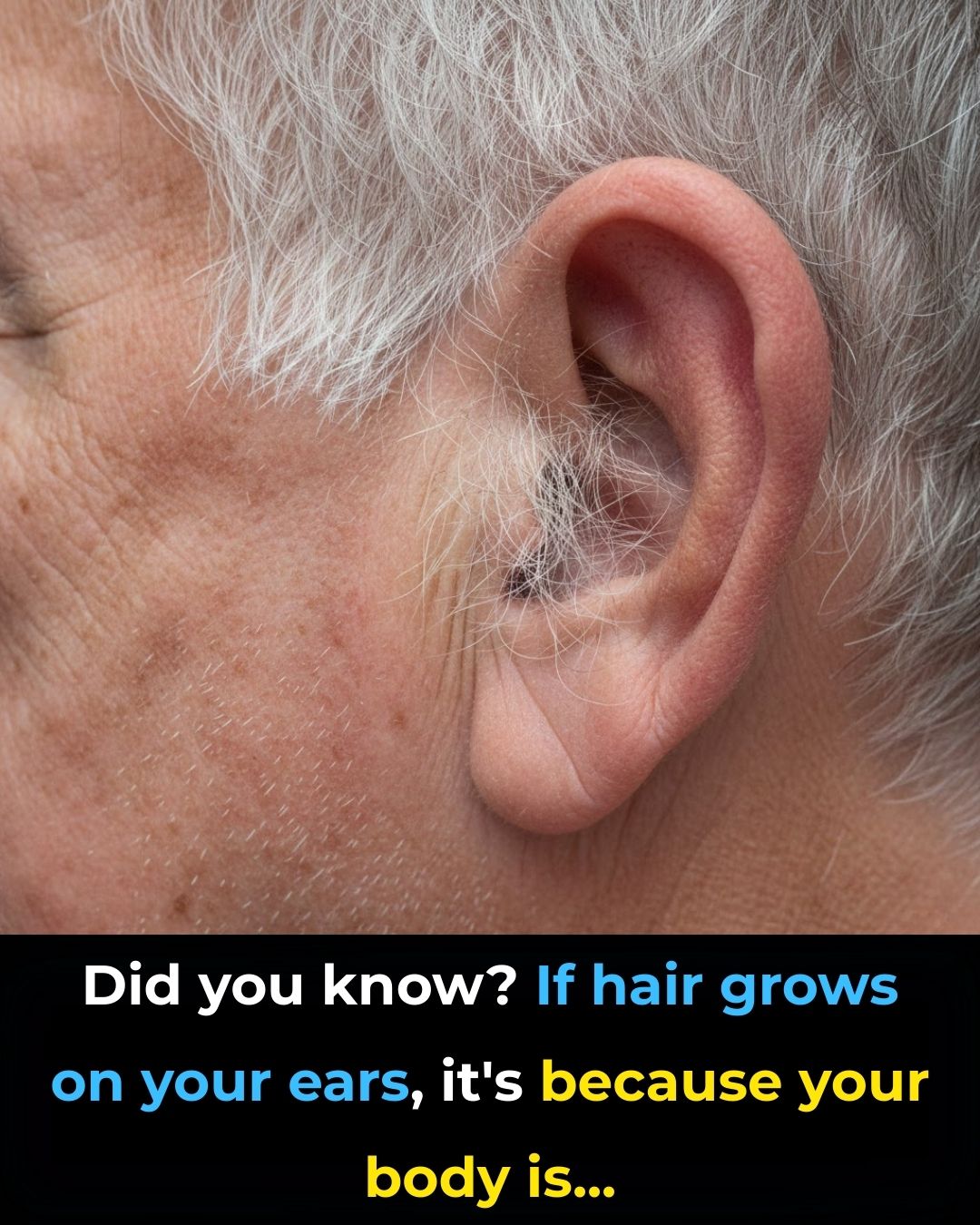
More prominently after age 50–60
Importantly, this is not an increase in total body hair. It is a redistribution of hair growth patterns — some areas thin (like the scalp), while others become more active.
3. Is Ear Hair a Sign of Health Problems?
In most cases: No.
Ear hair by itself is not considered a disease indicator and is not used medically as a diagnostic sign.
Some observational studies have noted correlations — not causes — between prominent ear hair and certain conditions, such as:
Age-related cardiovascular changes
Long-term hormonal patterns
Genetic traits linked to metabolism or circulation
However:
Ear hair does not cause illness
It does not diagnose heart disease
It only becomes relevant if combined with other concerning symptoms
Doctors do not evaluate ear hair as a standalone medical marker.
4. Why Do Men Have More Ear Hair Than Women?
This difference largely comes down to androgen sensitivity.
Men:
Have higher lifetime exposure to testosterone
Hair follicles respond more strongly to hormonal shifts
More likely to develop terminal hair in ears and nose
Women:
Generally have lower androgen levels
Ear hair tends to remain fine and light
May notice increased facial or ear hair after menopause due to declining estrogen
After menopause, hormonal balance shifts, which can make androgen effects more visible — including new hair growth.
5. Why Do Some People Have Much More Ear Hair Than Others?
Genetics plays a major role.
Key influences include:
Family hair-growth patterns
