
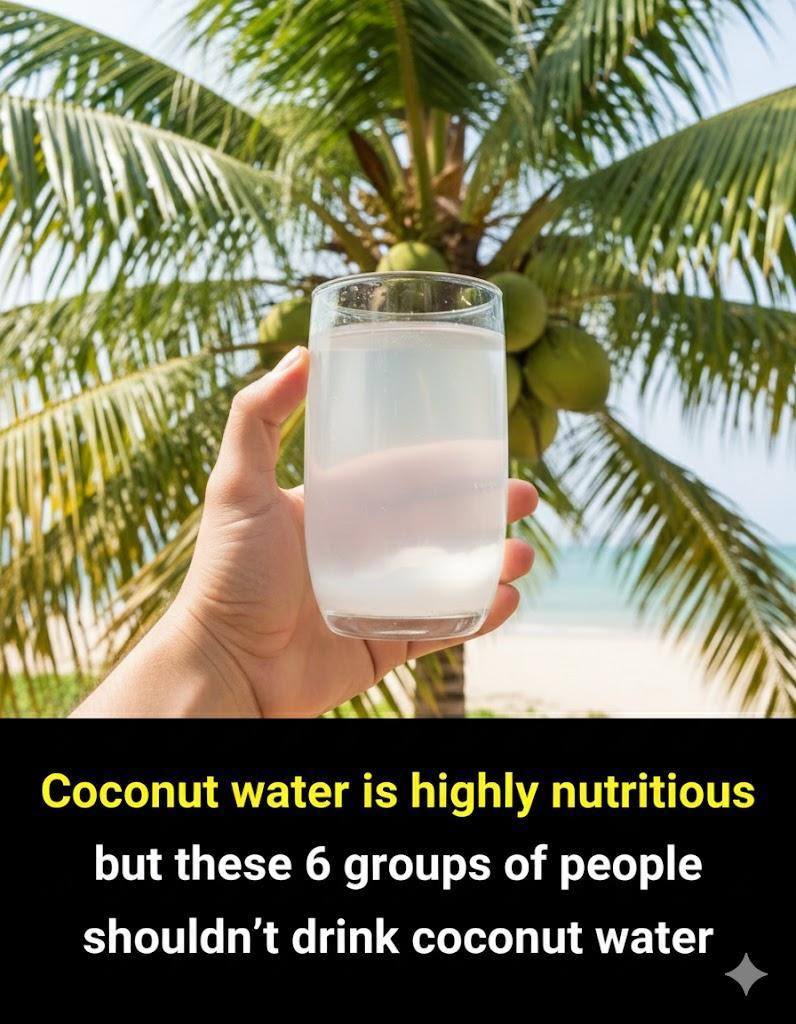
While coconut water is beneficial, 6 groups of individuals should limit or avoid it
Although coconut water is healthy, certain 6 groups should not consume it
Coconut water is often praised as a natural, refreshing beverage packed with electrolytes, vitamins, and minerals. It is low in calories, contains potassium and magnesium, and is frequently promoted as a healthier alternative to sugary drinks. Many people use it for hydration after exercise or during hot weather.
However, despite its nutritional value, coconut water is not suitable for everyone. Like any food or beverage, it can have unwanted effects in certain individuals — especially when consumed in large amounts or in the presence of underlying medical conditions.
Below are 6 groups of people who may need to limit or avoid coconut water.
6 lý do nước dừa là thức uống bổ sung nước tuyệt vời nhất
1. Individuals with Kidney Disease
Coconut water is naturally high in potassium. While potassium is essential for nerve and muscle function, people with kidney disease may struggle to regulate potassium levels effectively.
Excess potassium in the blood (a condition called hyperkalemia) can lead to:
Irregular heartbeat
Muscle weakness
Fatigue
In severe cases, cardiac complications
Because impaired kidneys cannot efficiently remove excess potassium, individuals with chronic kidney disease should consult a healthcare provider before consuming coconut water regularly.
2. People with High Potassium Levels
Even without diagnosed kidney disease, some individuals may already have elevated potassium levels due to medications or metabolic conditions.
Certain drugs — such as ACE inhibitors, potassium-sparing diuretics, or some heart medications — can increase potassium retention. Adding potassium-rich drinks like coconut water may further raise levels to unsafe ranges.
Routine blood tests can help determine whether potassium intake should be limited.
