
If you’ve ever embarked on the journey of cooking beans from scratch, you may have encountered a curious phenomenon: a thick, soapy white foam that seems to take over the pot as the beans begin to boil. This foam can be quite surprising if you’re not expecting it, and it might even cause a bit of panic if you’re unsure whether it indicates that something is amiss.
Rest assured, the appearance of foam when boiling beans is completely normal and is a common occurrence for anyone cooking legumes. Understanding why this foam forms, what it consists of, and whether it poses any risk are essential steps in mastering the art of bean preparation. In this article, we’ll delve into the science behind this foamy mystery and provide practical tips to manage it.
Advertisement
1. Yes, That Thick White Foam on Boiling Beans Is Normal
The appearance of a thick white foam when boiling beans is a common and normal occurrence. This phenomenon happens because beans, like many other legumes, contain compounds that react when exposed to heat and moisture. As the beans cook, these compounds are released into the water, creating the foam you see.
Typically, this foam is most noticeable during the initial stages of boiling, especially if the beans were not soaked prior to cooking. If you’re cooking a standard batch of beans, say 1 cup of dried beans in about 4 cups of water, expect to see the foam appearing within the first 10-15 minutes of boiling.
2. What That Soapy-Looking Foam Actually Is: Saponins and Starch
The foam formed when boiling beans is primarily made up of saponins and starches. Saponins are naturally occurring compounds found in many plants, including beans, that create a soap-like froth when agitated. This is why the foam can appear so ‘soapy’ and why it tends to dissipate when the boiling action slows.
In addition to saponins, the starches in beans also contribute to the foaming action. As beans heat up, the starch molecules begin to break down and are released into the water, further contributing to the foam. This combination of saponins and starch creates the thick, frothy layer that can sometimes spill over the sides of your pot.
3. Why Beans Foam So Much More Than Other Foods
Beans produce more foam than many other foods due to their high content of saponins and complex carbohydrates, such as starches and oligosaccharides. These components are particularly abundant in the outer layers of the bean seed coat.
The foaming action is also enhanced by the agitation and movement caused by the boiling process. As the beans bounce around in the pot, they release more of these compounds into the cooking water, leading to a more pronounced foaming effect compared to other foods that might not have as high a concentration of these components.
4. Is the Bean Foam Safe to Eat or a Sign Something’s Wrong?
The foam produced during the cooking of beans is perfectly safe to eat. It is simply a byproduct of natural compounds found in the beans and poses no health risks. However, some people prefer to skim it off for aesthetic reasons or to slightly reduce the concentration of saponins and oligosaccharides, which some believe may contribute to digestive discomfort.
It is important to note that the presence of foam is not an indicator of spoiled beans or a cooking mistake. As long as your beans were stored properly and do not emit any off smells, the foam is simply a sign that the natural cooking process is taking place.
5. When You Should Worry: Off Smells, Colors, and Other Red Flags
While foam itself is not a cause for concern, there are certain signs to watch out for when cooking beans. If your beans emit a sour or off-putting odor, it could be a sign of spoilage, and it would be wise to discard them.
Similarly, if the cooking water turns an unusual color or the beans themselves appear discolored or slimy, it might indicate that the beans were not stored properly or have been contaminated. In such cases, it’s best to err on the side of caution and avoid consuming the batch.
6. Simple Tricks to Keep the Foam From Boiling Over
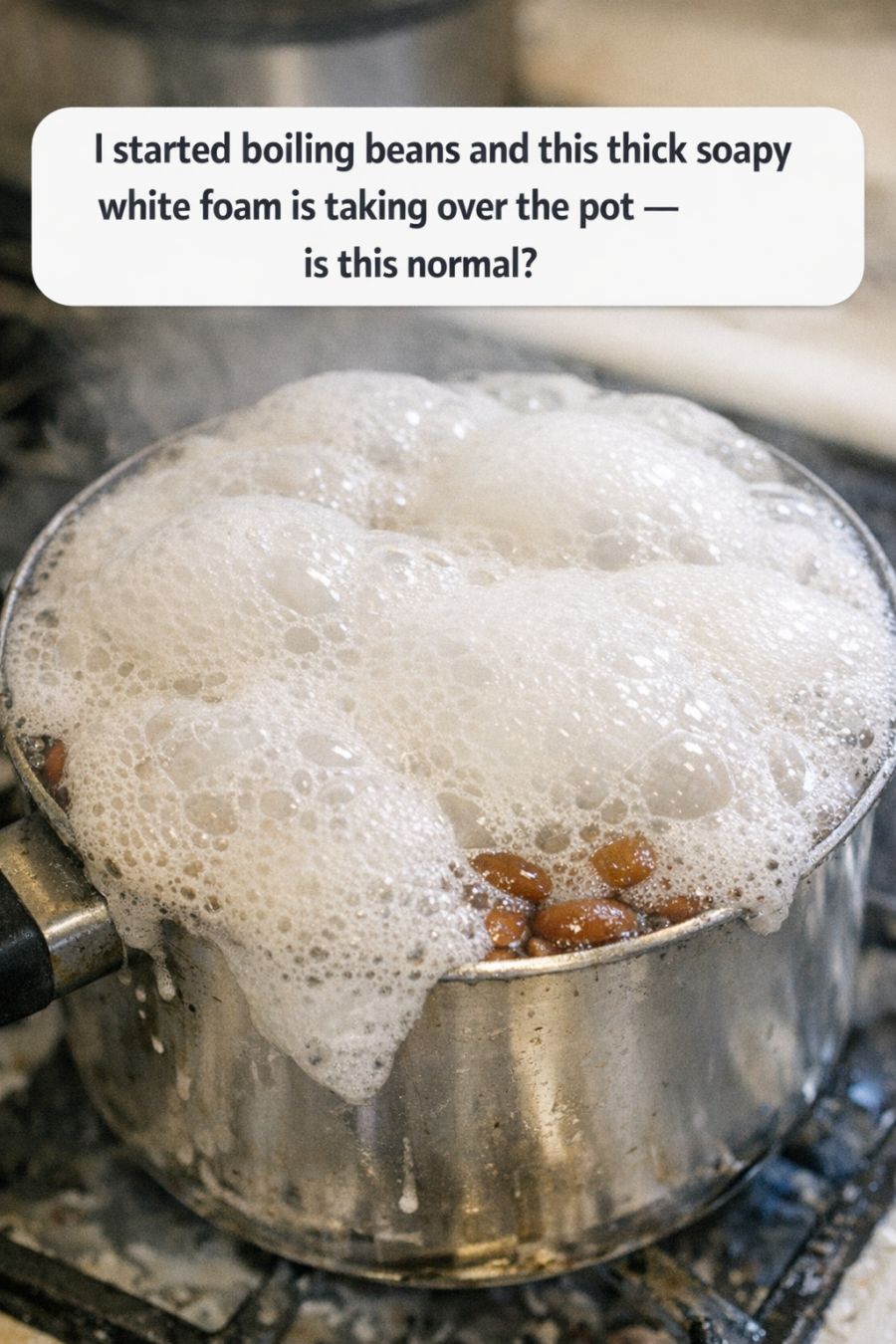
I started boiling beans and this thick soapy white foam is taking over the pot — is this normal?
Pages: 1 2
